
Strengthening Freshwater Conservation Through Local Wisdom and Environmental Education
In many parts of Sumatra, rivers are more than natural ecosystems. They are cultural spaces, sources of livelihood, and living classrooms for communities that depend on freshwater resources. One of the most important local traditions that reflects this relationship is Lubuk Larangan, a community-based river management system where fishing is temporarily prohibited to allow fish populations and river ecosystems to recover.
This traditional conservation practice continues to play an important role in maintaining river health. Through customary rules and collective responsibility, local communities protect selected river sections from overfishing and other disturbances. In Bathin III Ulu District, Muaro Bungo Regency, Jambi, the Lubuk Larangan tradition is believed to have been practiced for generations and remains an important part of community life.
However, this local wisdom is increasingly under pressure. The rapid expansion of illegal gold mining has begun to threaten rivers, aquatic biodiversity, and the social structure of surrounding communities. Mining activities, carried out using both simple tools and heavy machinery, have caused river degradation and habitat disturbance. These changes not only affect fish populations but also threaten wildlife that depends on healthy freshwater ecosystems, including otters.
Why Otters Matter for River Conservation
Otters are important indicators of healthy freshwater habitats. Their presence often reflects the availability of fish, clean water, natural riverbanks, and relatively undisturbed aquatic ecosystems. In Sumatra, otters also hold strong potential as flagship species for environmental education because they are familiar to local communities, easy to recognize, and closely connected to river ecosystems.
The Bathin III Ulu area is located near Kerinci Seblat National Park, a landscape known to support several otter species, including the Eurasian otter (Lutra lutra), smooth-coated otter (Lutrogale perspicillata), hairy-nosed otter (Lutra sumatrana), and Asian small-clawed otter (Aonyx cinereus).
During discussions with local communities, many residents reported otter sightings around Lubuk Larangan areas. However, otters are still often perceived as pests because they are believed to take fish from protected river sections. This perception highlights the need for continuous education to improve public understanding of the ecological role of otters and their connection to healthy river systems.
Educational Outreach in Bathin III Ulu, Muara Bungo, Jambi
From 20 to 27 April 2026, Yayasan Berang-Berang Indonesia conducted field surveys and educational outreach activities in Bathin III Ulu District, Muaro Bungo Regency, Jambi. The program was designed to introduce students and local communities to otter conservation, freshwater ecosystem protection, and the importance of maintaining the Lubuk Larangan tradition as part of sustainable river management.
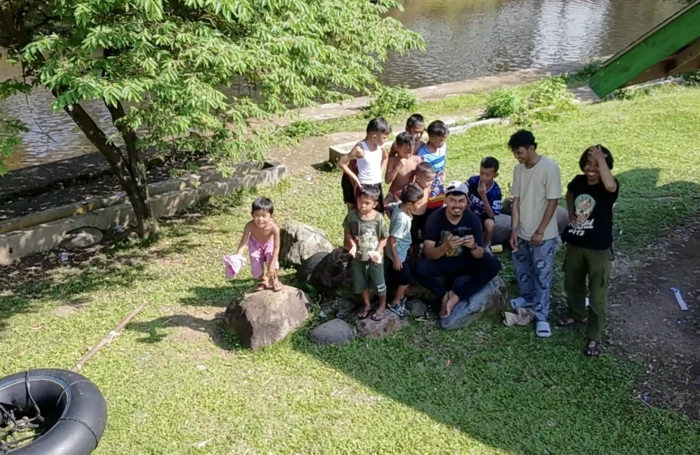
Due to school schedules and examination periods, the outreach team was able to visit two elementary schools and one community recreation area. The activities combined presentations, discussions, interactive games, poster distribution, and informal interviews with local residents.
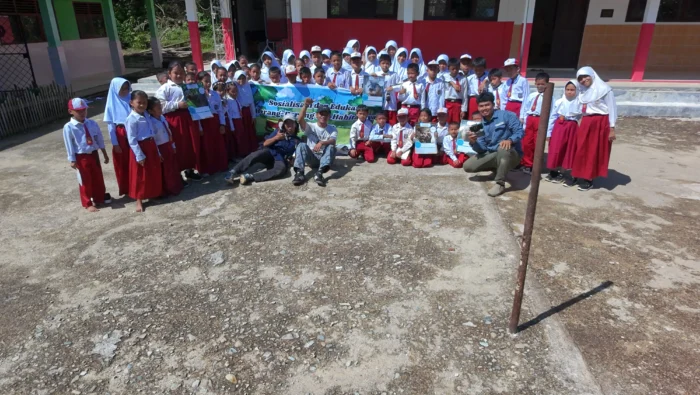
Outreach at Elementary School 47 Laman Panjang, Bathin III Ulu, Muara Bungo, Jambi
The first educational session was held on 25 April 2026 at Elementary School 47 Laman Panjang. The activity involved 35 participants, including students and teachers.
The session introduced students to otter species, their habitats, and their ecological importance in freshwater ecosystems. Interactive games were used to encourage participation and to evaluate students’ understanding after the presentation.
As part of the activity, Yayasan Berang-Berang Indonesia distributed educational otter posters to the school and otter workbooks to participating students. These materials were provided to support continued learning beyond the outreach session.
Outreach at Elementary School 87 Sangi, Bathin III Ulu, Muara Bungo, Jambi
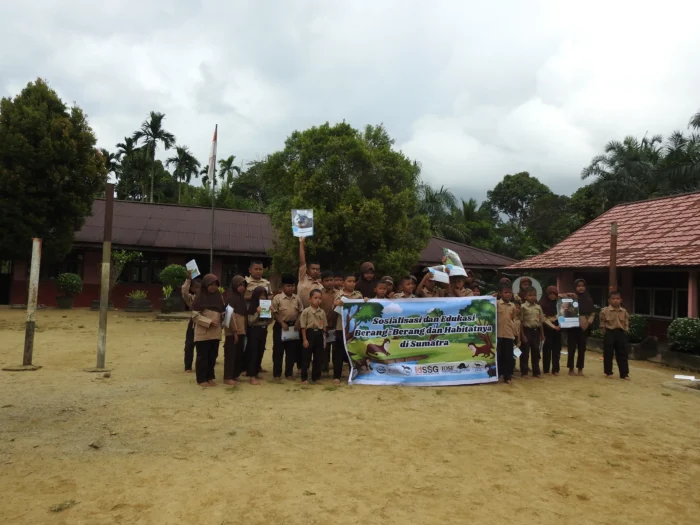
The second school outreach activity was conducted on 27 April 2026 at Elementary School 87 Sangi. The session was attended by 56 students and teachers.
Similar to the previous school visit, the outreach focused on otter species, freshwater habitats, river conservation, and the importance of protecting healthy aquatic ecosystems. Interactive games were again used to strengthen students’ understanding and encourage active participation.
The team also distributed otter posters and otter-themed merchandise to students as part of the educational campaign.
Key Findings from the Field
The outreach activities were successfully implemented and received positive responses from students, teachers, and community members. However, the remote location of the project area created several logistical and coordination challenges, particularly in obtaining permissions and arranging school visits.
Field surveys were also affected by very high rainfall during the survey period. Increased river water levels limited the team’s ability to conduct direct observations around the camp area. As a result, no otters or clear signs of otter presence were directly observed during the fieldwork. Information on otter presence was therefore primarily obtained through community reports and informal interviews.
Despite these limitations, the activities generated important information about local knowledge, community perceptions, and habitat threats. The most significant threat identified was river degradation caused by illegal gold mining. Community interviews also revealed concerning social impacts, including the increasing involvement of high school students in mining activities due to the financial benefits of gold extraction.
Teachers expressed concern about the difficulty of encouraging environmental awareness among students when mining activities are perceived as economically attractive. This situation shows that conservation education must not only focus on wildlife, but also address broader social and economic challenges affecting local communities.
The Importance of Continued Environmental Education
The findings from Bathin III Ulu highlight the urgent need for continued environmental education in schools and local communities. Strengthening awareness among students, teachers, and residents can help build long-term support for river conservation and otter habitat protection.
By using otters as flagship species, conservation messages can be made more relatable and easier to understand. Otters can help connect discussions about biodiversity, clean water, fish populations, local traditions, and the future of freshwater ecosystems.
Protecting otter habitats in Lubuk Larangan communities is not only about conserving one group of wildlife. It is also about supporting local wisdom, maintaining healthy rivers, protecting community livelihoods, and ensuring that future generations understand the value of freshwater ecosystems.
Through collaboration between local communities, schools, conservation organizations, and traditional leaders, Lubuk Larangan can continue to serve as a powerful example of community-based river conservation in Sumatra.